
How to Get Court Records
Begin at the Carter County Circuit Court Clerk for Circuit Criminal and General Sessions records. Johnny Blankenship's local office site lists 423-542-1835. It also lists an annex at 900 East Elk Avenue, Suite 906, Elizabethton. The state directory groups Circuit, Criminal, and Chancery courts at 801 East Elk Avenue. Call ahead so staff can point you to the right counter. Chancery requests go to Clerk and Master Andrew J. LaPorte at 423-542-1812 or clerkandmaster@cartercountytn.gov.
You have several ways in. The clerk posts online docket PDFs. The clerk takes calls and serves walk-ins at the counter. Mailed or emailed requests work too, where appropriate. Public Case History covers appeals only. The state offers no open portal for Carter trial files. Whatever channel you pick, give the court, the case number, the party caption, the date range, the record type, your preferred format, and whether you need certification.
Carter Record Custodians
Office names matter in Carter County. The Circuit Court Clerk publishes the Circuit Criminal and General Sessions calendars. The Clerk and Master serves Chancery. Mary Gouge, the Carter County Clerk, is a separate elected official. Her administrative records are not court case files. A city court clerk in Elizabethton, Johnson City, or Watauga may hold your municipal citation instead.
Carter court-record route
Circuit Court Clerk annex: 900 East Elk Avenue, Suite 906, Elizabethton, TN 37643
Phone: 423-542-1835
Chancery courthouse: 801 East Elk Avenue, Elizabethton, TN 37643
Clerk and Master: 423-542-1812
Types of Court Records
Each type of court record answers a different question. A docket or calendar lists events and brief outcomes. A pleading asks the court for relief or answers another filing, while an order or judgment states what the court decided. Exhibits are items offered during a proceeding. Payment and enforcement papers can include installment orders, execution, or garnishment material. A transcript is a written account prepared through an authorized process. An electronic recording is the official captured audio where Rule 26 applies.
The record on appeal adds another layer. Tennessee appellate Rule 24 can include certified trial papers, original exhibits, and transcript or statement material. That package is broader than the public docket PDF, but it exists for appellate review. Ask the clerk for the precise layer you need.
Carter Inspection or Copy
Tennessee public-record guidance draws a line between free inspection and a copy request. A readily available public record should be produced promptly. If it cannot be, the custodian generally has seven business days to provide it, deny it, or explain the lawful extra time required. Court rules and orders still control access to court material.
The Tennessee Public Records Act guidance from the Comptroller's office sets out these duties.
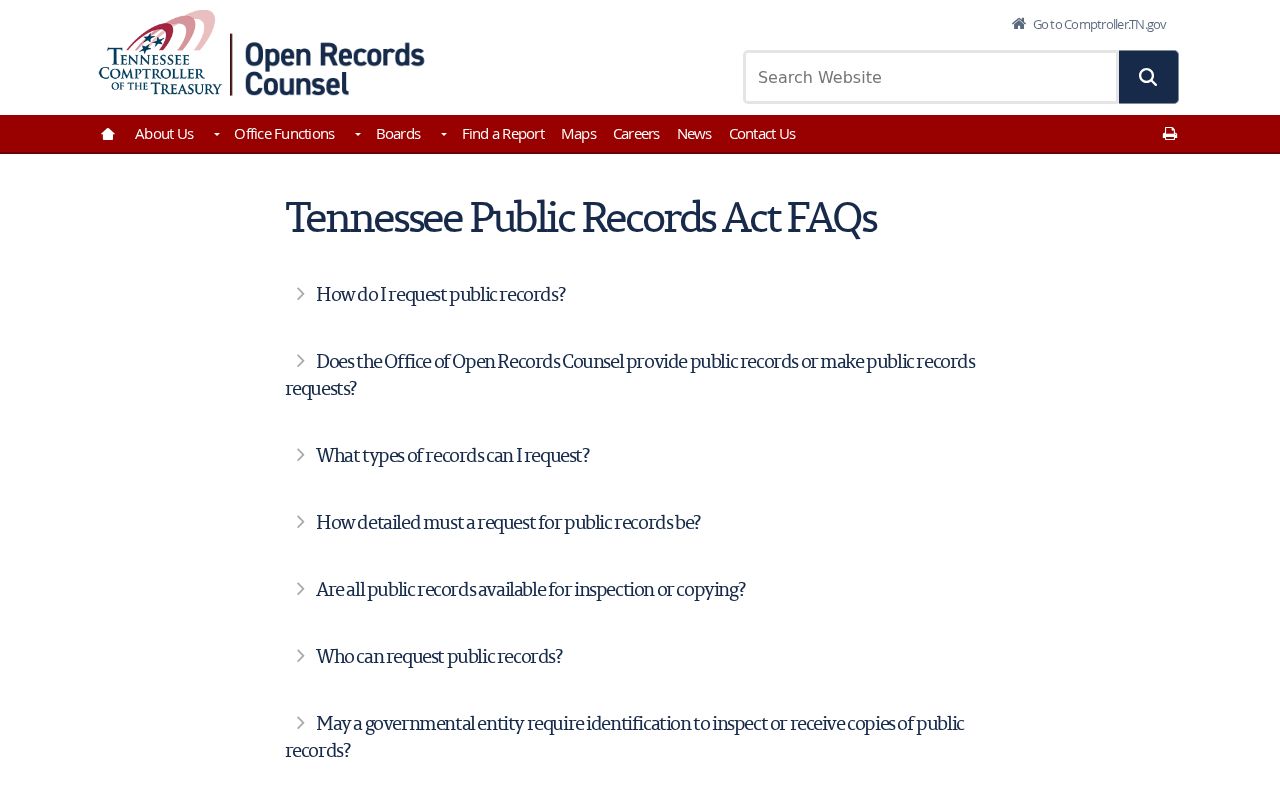
A narrow, workable request keeps access choices where they belong: with the Carter County court and clerk.
What a Court Record Contains
Sample Carter docket lines show why you must name the item you want. A civil line may carry a CV number, caption, lawyers, a civil warrant label, an amount, costs, a result, or a next date. Criminal lines may show a numeric or ST identifier plus the charge, officer, counsel, bond field, balance, plea deadline, and setting. The filed warrant or order holds the operative detail.
| Docket | Dates, settings, entries, and short outcome notes |
|---|---|
| Pleading | A filed claim, request, answer, motion, or warrant |
| Order | The court’s signed direction or judgment |
| Exhibit | Evidence offered or maintained with the file |
| Recording | Official electronic audio where the court uses it |
| Appeal Record | Certified papers, exhibits, and transcript material under Rule 24 |
Carter Electronic Recordings
Tennessee Supreme Court Rule 26 governs official electronic recordings when a court uses that method. It covers simultaneous recordings and access to media for an indigent party. A recording is not the same item as a transcript. A transcript may require a reporter or authorized transcriber. The official Rule 26 source spells out these terms.
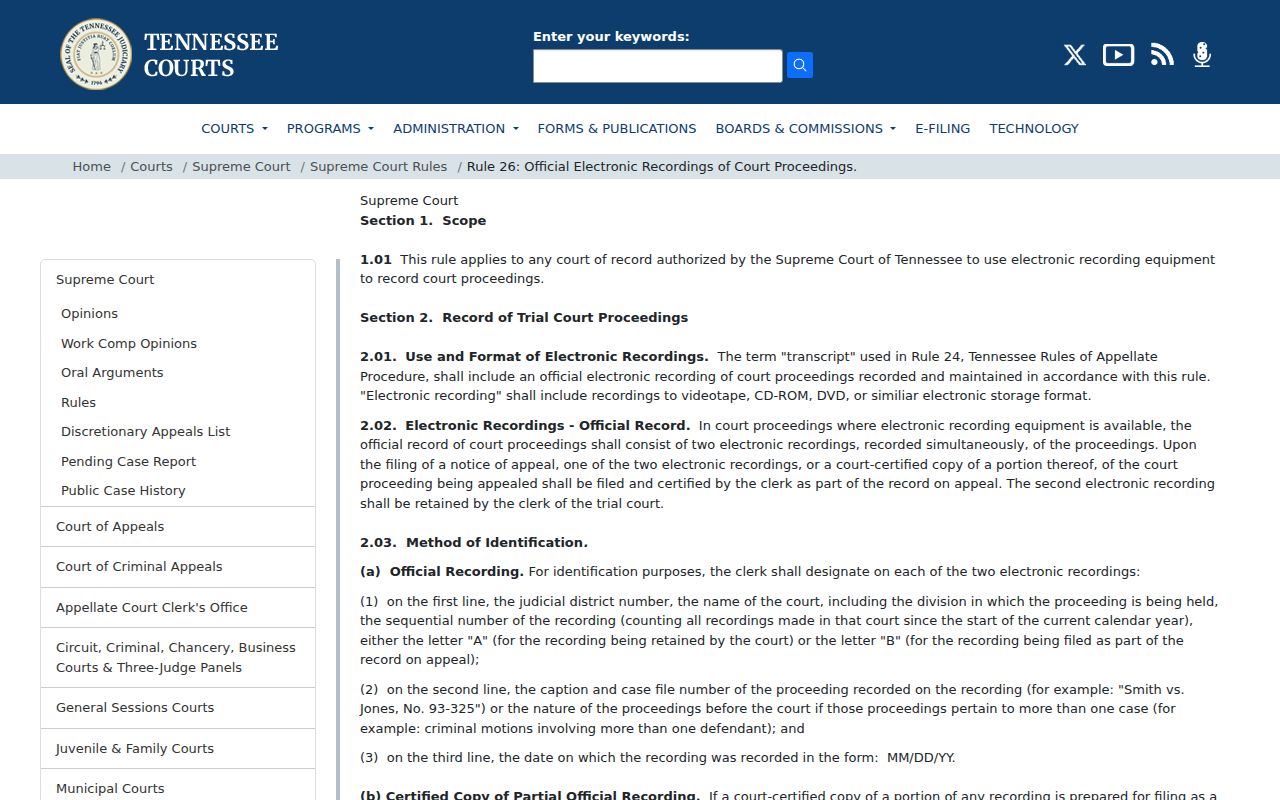
The rule lets a Carter requester say exactly what is needed: audio, a transcript, or filed papers.
Certified Copies and Fees
An ordinary copy just reproduces a public item. A certified copy bears the clerk's certification and may carry a seal or a separate charge. Carter County posts no official court-specific fee sheet online. Get a quote before paying, and ask whether retrieval, redaction, media, certification, postage, or advance payment applies.
| Item | Published Guidance | Carter Action |
|---|---|---|
| Inspection | Generally free | Arrange with the custodian |
| Black-and-white copy | Common state cap of $0.15 per page | Confirm court fee |
| Color copy | Common state cap of $0.50 per page | Confirm court fee |
| Labor | May begin after the first hour | Request an estimate |
| Certified copy | No local amount published | Ask about seal and certification |
Carter Appeal Record
A trial docket and an appellate record answer different questions. The docket locates settings and entries. Rule 24 describes the papers and materials assembled for review once an appeal begins. The Rule 24 source sets out that list.
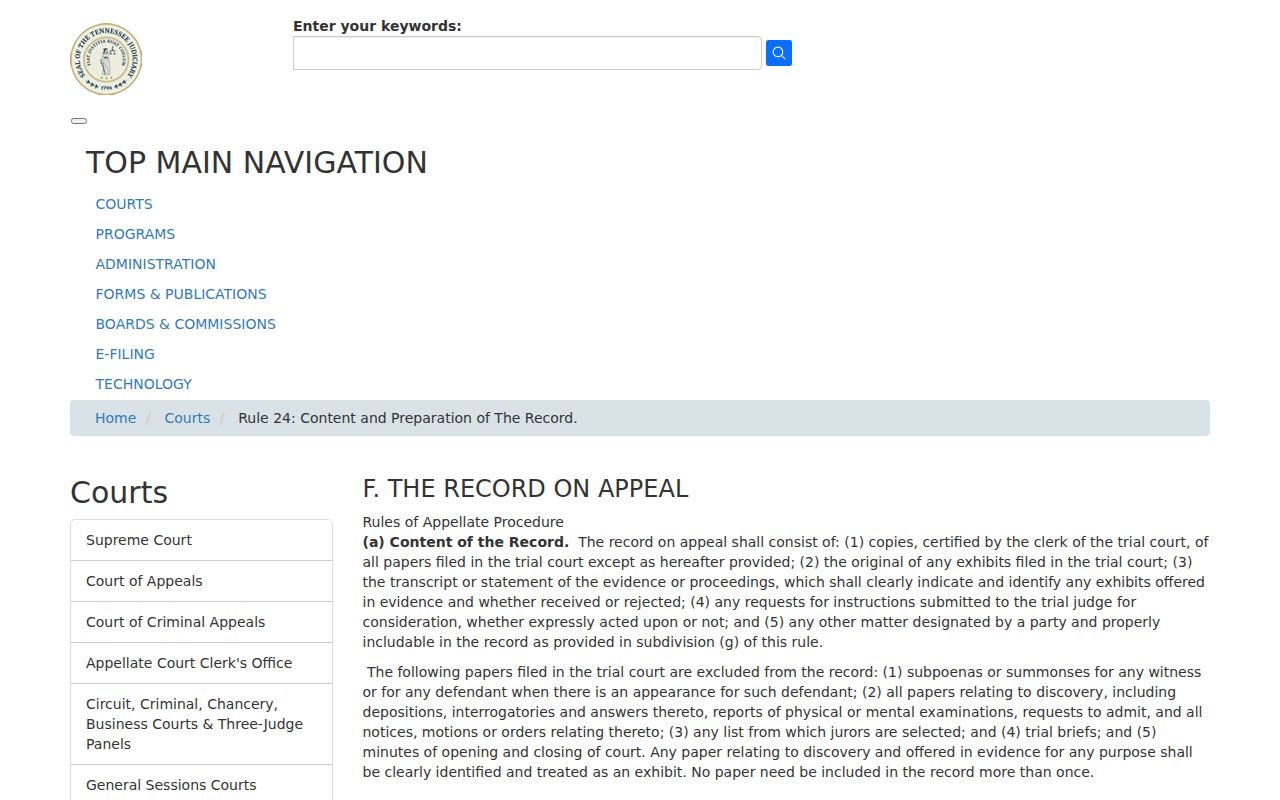
A posted Carter calendar alone is never the full record on appeal.
Public Access and Sealed Records
Rule 34 defines court records broadly and recognizes a public right of inspection, subject to statutes, rules, and court orders. Nonpublic categories include sealed or protected material, unpublished judicial drafts, deliberative records, and internal case-management content. Personal identifiers may be redacted. A file missing online is not proof of sealing. The official Rule 34 page lists these categories.
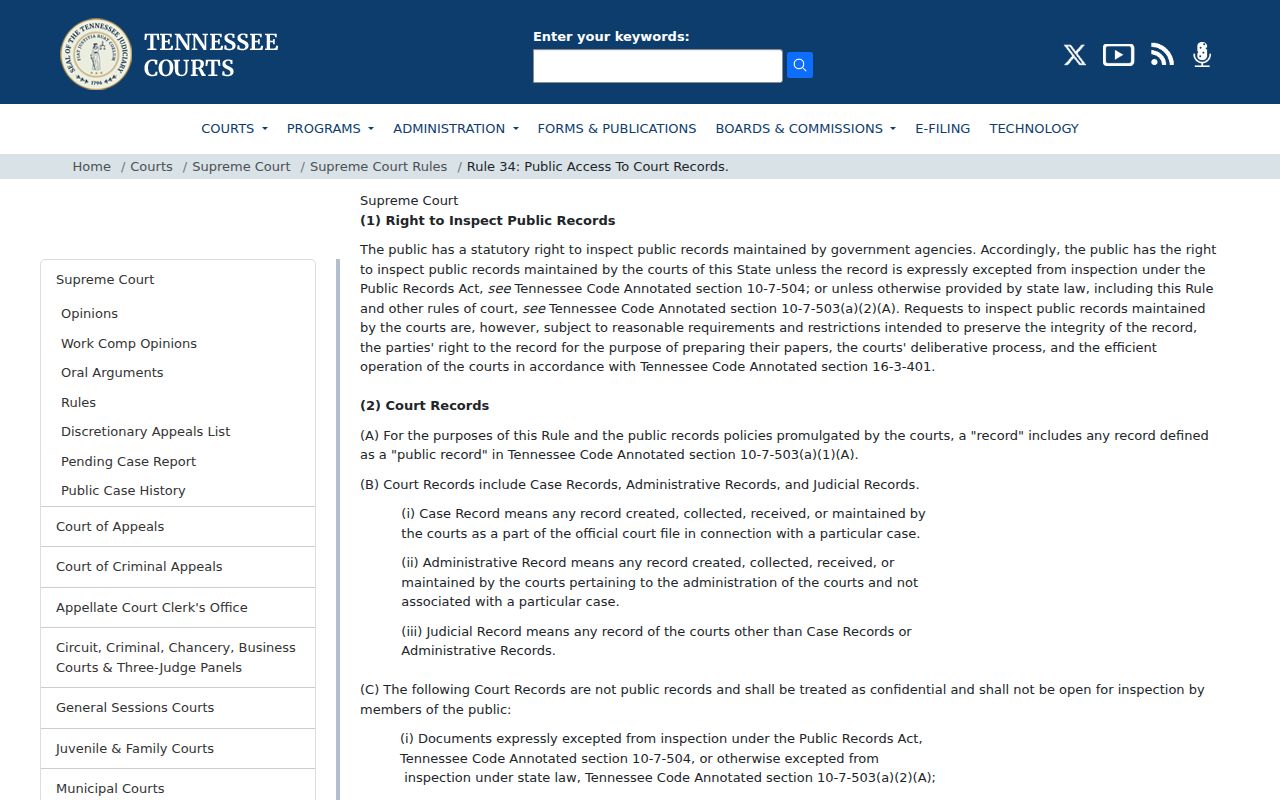
The rule frames Carter access at the level of the specific record and data field. It rejects any broad claim that every case file is public.
Restricted item: Ask whether a redacted version exists and request the statute, rule, or order that controls access.
Narrow Carter Record Requests
A request works best when it is specific. Ask the clerk to name the public record custodian for the court, then ask for inspection or a copy tied to a real Carter County case number and date. Request the fee for an ordinary copy and for a certified one, the accepted payment, whether an electronic copy exists, and any redaction or access limit. Then swap in the actual case details.
Never send a Social Security number, birth date, income figure, or license value through ordinary email. Blank public forms can ask for very sensitive data once filled out. If all you have is a case locator, start with the Carter County case search routes rather than asking for an entire file.
Names on Carter civil docket entries matter more than people expect. A line reading civil warrant, agreed order, consent judgment, default, or motion for installment payments marks an event. It is not the signed filing itself. A balance field is not a payoff quote either. Ask for the judgment, the later payment order, an execution, garnishment, or satisfaction, whichever answers your real question. It never hurts to ask the clerk whether a later entry changed the amount.
For a Circuit Criminal record, give the numeric case identifier, the judge, and the docket date when you know them. Public samples can list counsel, a bondsman field, a balance, a plea deadline, a hold, or a future setting. Those calendar fields cannot tell you whether a capias still has force or what the final disposition was. Only the later file can do that. One narrow request for the right order beats asking for every paper in the case.
Carter County posts no electronic-delivery policy, certified-copy order form, transcript-order page, or bulk-record policy. So put those questions in writing. Ask whether the office can return a PDF. Ask whether redaction labor costs extra, whether certification includes a seal, and when payment is due. If the item sits with another office, ask for that custodian's name. A denial from one clerk does not end the search.
Keep the clerk's written estimate. Note which version of the record you actually received.