
Searching Cases by Name
The Carter County Circuit Court Clerk posts no open party-name database for trial cases. Instead, the official clerk site offers Circuit Criminal and General Sessions indexes. Each one walks down from a month to a date, a judge, and a PDF. Guess the likely court and hearing window first. Then search that PDF for an exact name or case number. One caution: a calendar line only locates a case. It is not the file. Keep your search path narrow. Hand over no more personal data than the task truly needs.
- Choose the likely court and docket family.
- Open its month and date on the county index.
- Search the PDF for the surname, caption, or number.
- Call or visit the clerk if no match appears.
- Use the appellate or federal system only when jurisdiction calls for it.
| Field Label | Type | Required | Notes |
|---|---|---|---|
| Month and date | Index | Usually | Narrows the PDF archive |
| Party or caption | PDF text | No | Spelling affects results |
| Case number | PDF text | No | Best locator when known |
| Court or judge | Index label | No | Selects the right file |
Carter Trial Search Limits
One link on the clerk site, WebCaseSearch, opens an Icon Case Management sign-in screen. It asks for a user ID, a password, a captcha, and an official-use acknowledgement. That is not guest access. Public users should not try to get around it. Credentials are not something to assume you can request. A name missing from a PDF proves little, either. The case may sit with a different clerk, be set for another date, be restricted, or simply not be posted yet.
Public route: Use posted PDFs first, then contact the responsible clerk for a missing date or the complete public file.
Searching by Case Number
Carter County samples show several numbering styles. General Sessions civil examples carry CV. Criminal and traffic examples can carry ST or TR. Circuit Criminal samples use numeric identifiers. Keep every dash, letter, and leading zero intact. Try the full value first. Then try the bare numeric core if the PDF text recognition stumbles. The prefix helps route a request, but it is no universal Tennessee code. Tell the clerk which Carter court issued the number, the rough date, and the case type. Remember that an appeal may carry a different appellate number.
Carter PDFs by Date
The public archive works by calendar, not by query. Circuit Criminal pages run month, date, and judge, and General Sessions pages may split into regular, civil, and detainer calendars. Pick the right docket family first. Then save the exact URL, filename, page, court heading, and judge label, because those details give the clerk a clean reference if a record later moves or a link changes. A dated PDF can show a setting that has since been reset, so it proves what was posted, not that the event stands. When travel or a deadline rides on the answer, call the Carter County Circuit Court Clerk at 423-542-1835.
What a Case Search Returns
A docket result can list an entry number, date, case number, caption, charge or claim, counsel, officer, bondsman, balance, result, and next setting. Fields vary across dockets. Civil lines may show a civil warrant, costs, agreed order, default, installment motion, or trial. Criminal lines may show a plea deadline, hold, capias notation, or later setting. Short labels never replace the underlying order.
| Case Number | Numeric or a value using CV, ST, or TR |
|---|---|
| Style | The caption naming parties or the State |
| Case Detail | A charge, claim, or calendar category |
| Setting | A hearing, trial, deadline, or next date |
| Result | Local shorthand that needs context |
Carter Appellate Case History
For state appellate cases, not Carter trial cases, Tennessee Public Case History is the official search, and it supports lookup by appellate number, case style, party, and business or organization. Rule 24 explains that a record on appeal may hold certified trial papers, original exhibits, and transcript or statement material. The Public Case History source displays these fields.
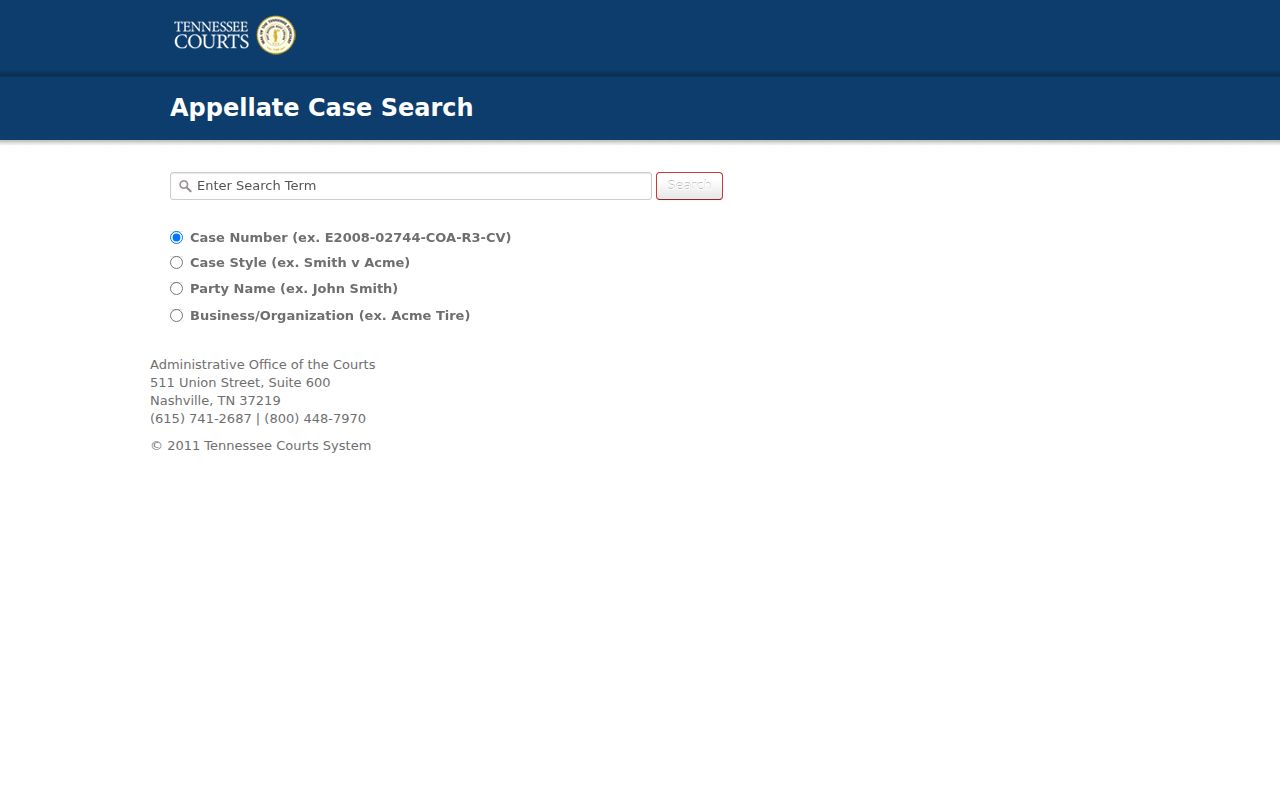
That system covers only the appellate layer. Using it keeps a local trial search from landing in the wrong place.
Statewide vs County Case Search
Tennessee offers no public statewide trial-court search. The Carter archive supplies selected local calendars, while Public Case History handles appeals, and neither one replaces the other.
| Tennessee Public Case History | Carter Clerk Archive |
|---|---|
| State appellate cases | Selected local trial calendars |
| Appellate search fields | Month, date, judge, and PDF |
| Best for an appeal | Best for a known Carter setting |
| Not a trial search | Not a complete file database |
Carter Federal Case Search
Federal cases live in a different system. PACER is the official federal docket and document service, so select the Eastern District of Tennessee and confirm the Greeneville or Northeastern Division context. An account and published access charges may apply. Carter County PDFs hold no federal filings. The official PACER resource lays out the terms.
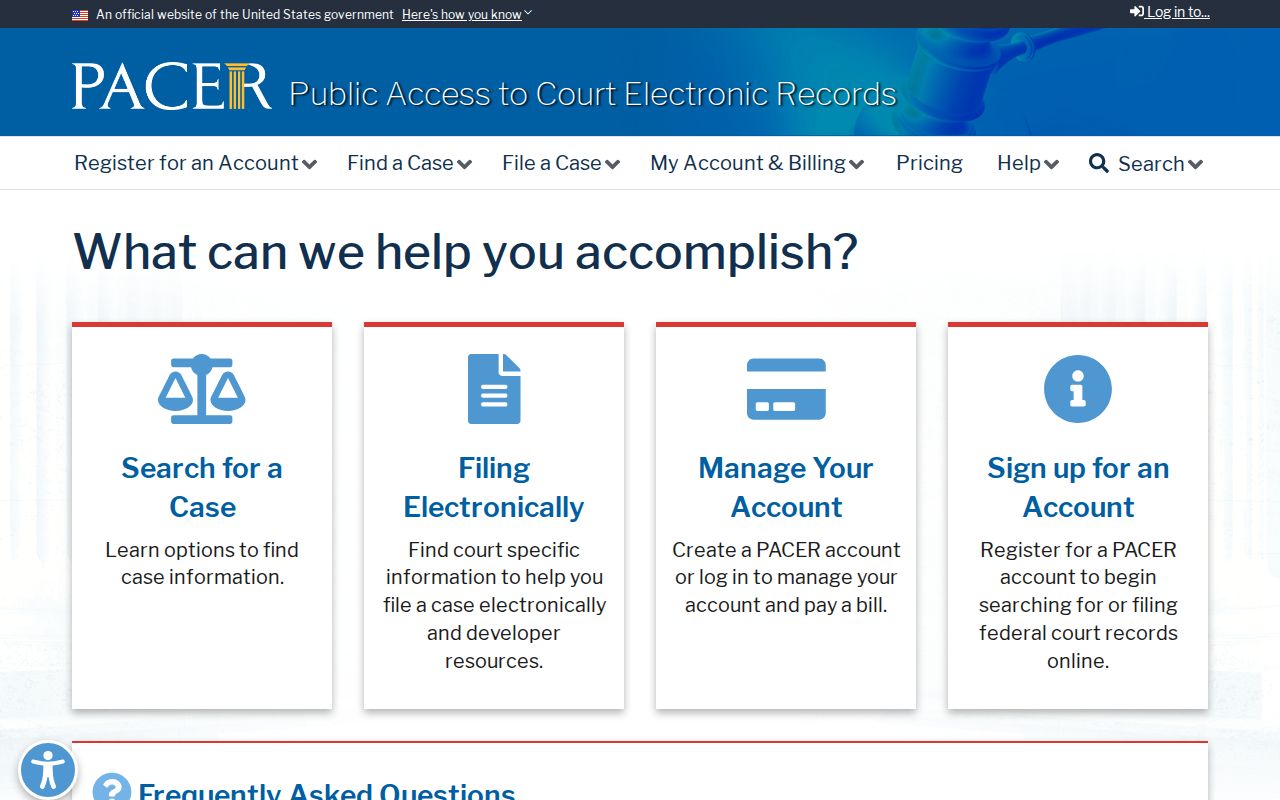
That is the national source for federal dockets, and PACER also offers a CM ECF court lookup.
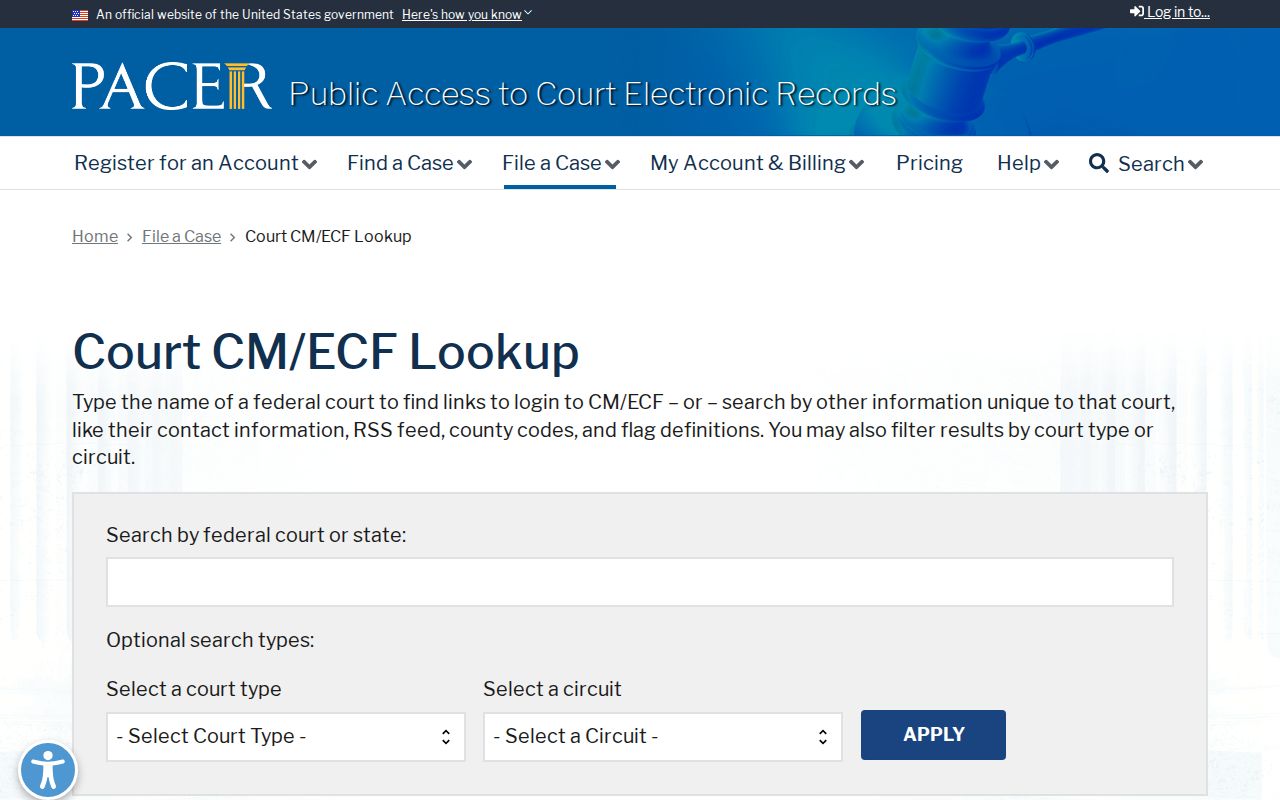
The lookup distinguishes the federal filing court from Tennessee and Carter County sources.
Access and Restricted Cases
Tennessee Supreme Court Rule 34 opens most court records to the public. It also shields certain material. Sealed files, judicial drafts and deliberations, internal case-management data, and statutory exceptions stay off limits. Juvenile matters and sensitive fields can carry extra restrictions. If a clerk denies access, ask two things: whether a redacted public version exists, and what law or order controls the denial. A precise request helps in another way. It lets the clerk tell a Carter County docket entry apart from the order, pleading, recording, or other court record behind it.
Missing a PDF does not mean a case is sealed. The gap may come from a posting delay, a changed filename, another docket family, or another office holding the file. Once the case turns up, a focused Carter County court records request can bring out the pleading or order behind the docket line.
Know which General Sessions list you are searching, too. Carter County keeps the regular calendar separate from its civil and detainer lists. The June archive splits those categories by date. A search limited to the regular list can miss a matter sitting on the civil calendar. Circuit Criminal pages add a wrinkle of their own: date links there may carry a judge label. Write down the judge and date whenever a numeric case number alone fails to pull up the right PDF.
The Tennessee Judge Stats service will not fill that gap. It reports aggregate figures through fiscal-year, district, court, and judge filters, not party-level Carter County case results. Annual statistical reports behave the same way. They describe workload, while the local docket and clerk pin down a specific matter. Treating an aggregate count as a personal case result confuses two distinct official sources.
If the archive search still fails, contact the clerk with the least sensitive facts that can route the inquiry. Name the court type, the approximate month, any known case-number fragment, and whether you need a hearing, an order, or a filing. Chancery questions go to the Clerk and Master, not the Circuit Court Clerk. An Elizabethton municipal citation belongs on the city court route. Going court-first avoids unrelated systems and helps keep private identifiers out of the request.
People following a public Carter County case of local interest should preserve context as well. Note whether an entry came from Circuit Criminal, a regular General Sessions list, a civil calendar, or a detainer calendar. Quote the exact shorthand rather than expanding it from memory. Terms like capias, VOP, W/ATTY, and W/COSTS can turn on the surrounding line and later action. A clerk can point to the operative order. The PDF alone may show only the event that placed the matter on a date.