
How to Search Civil Dockets
Open the official General Session Dockets index, select a month, and choose a link labeled Civil for the appropriate date. The June 2026 page separates regular, civil, and detainer calendars. Search a text-readable PDF for the exact CV number or visible caption. Save the court, date, filename, and page number before contacting the clerk.
First decide whether the matter belongs in General Sessions, Circuit, or Chancery. The public archive is date-based, not a broad party-name database. Carter WebCaseSearch requires an authorized government login, and Tennessee Public Case History covers appeals rather than county trial cases. A failed search through either route does not establish that no civil matter exists.
- Choose General Sessions, Circuit, or the separate Chancery clerk route.
- Select the month and specifically labeled civil or detainer date.
- Search the PDF for the CV number or exact visible caption.
- Record the source date and page, then check whether a later setting superseded it.
- Request the specific warrant, judgment, order, or certified copy from the correct clerk.
Find a Carter CV Docket Line
The January 8, 2026 sample uses CV identifiers and displays entry number and date, party caption, attorneys and represented party, CIVIL WARRANT, amount and costs, and a result or next setting. The June 4, 2026 civil calendar is a separate five-page date-specific PDF. Check adjacent dates because a reset can move a matter away from the date first expected.
Results can include agreed, default, agreed order, motion for installment payments, motion granted, consent judgment, and trial. Preserve the precise wording. These terms identify recorded activity but do not reveal every operative term, current amount, service detail, or enforcement step.
What a Civil Docket Shows
Carter's inspected civil docket exposes the calendar layer. It can identify parties, counsel, a civil warrant, stated amount and costs, a setting, and short result notation. It does not necessarily contain the filed warrant, summons or return, judgment, payment order, garnishment, exhibit, or satisfaction. Ask for the exact document needed instead of treating the line as the complete file.
| Case Number | A CV identifier in inspected General Sessions samples. |
|---|---|
| Parties | The public caption, which may not display every file detail. |
| Civil Warrant | The case label, not a replacement for the filed warrant. |
| Amount and Costs | Dated figures requiring verification for a current balance. |
| Result or Setting | Short activity language or the next calendar event. |
Civil Warrant Versus Judgment
A civil warrant starts a General Sessions civil matter; a judgment records the court's disposition and terms. A docket row can reference both without reproducing either document. If service, liability, payment, enforcement, or appeal timing matters, request the public warrant, return of service, judgment, and later orders separately. “Default” should not be expanded beyond the docket wording until the judgment is reviewed.
Balance caution. An amount or balance on a dated PDF is not automatically a payoff quote. Ask whether later payments, interest, costs, credits, or orders changed it.
Types of Civil Cases on the Docket
General Sessions civil calendars may include civil warrants, collection matters, detainers, installment-payment motions, and other limited-jurisdiction proceedings. Circuit civil and Chancery cover other categories under Tennessee law and local organization. FY2023 Carter Circuit statistics included contract or debt, damages or torts, divorce, support, paternity, protection orders, parenting and child support, real estate, workers' compensation, adoption, and miscellaneous civil filings.
- General Sessions civil warrants for limited civil claims shown on date-specific PDFs.
- Detainers on separately labeled calendar dates requiring file-level context.
- Circuit civil matters involving broader categories and lower-court appeals where allowed.
- Chancery matters involving equitable, domestic, probate, and related work.
- Post-judgment activity such as installment motions, exemptions, and enforcement filings.
Installment Payments After Judgment
The official General Sessions civil forms index includes installment-payment, indigency, appeal-bond, garnishment or execution exemption, protected-income, and sworn-denial forms. The installment form contains court, county, case number, parties, judgment, proposed payment amount and frequency, service, hearing or reset dates, and a financial affidavit.
The Tennessee Courts forms collection shows the official filing context.
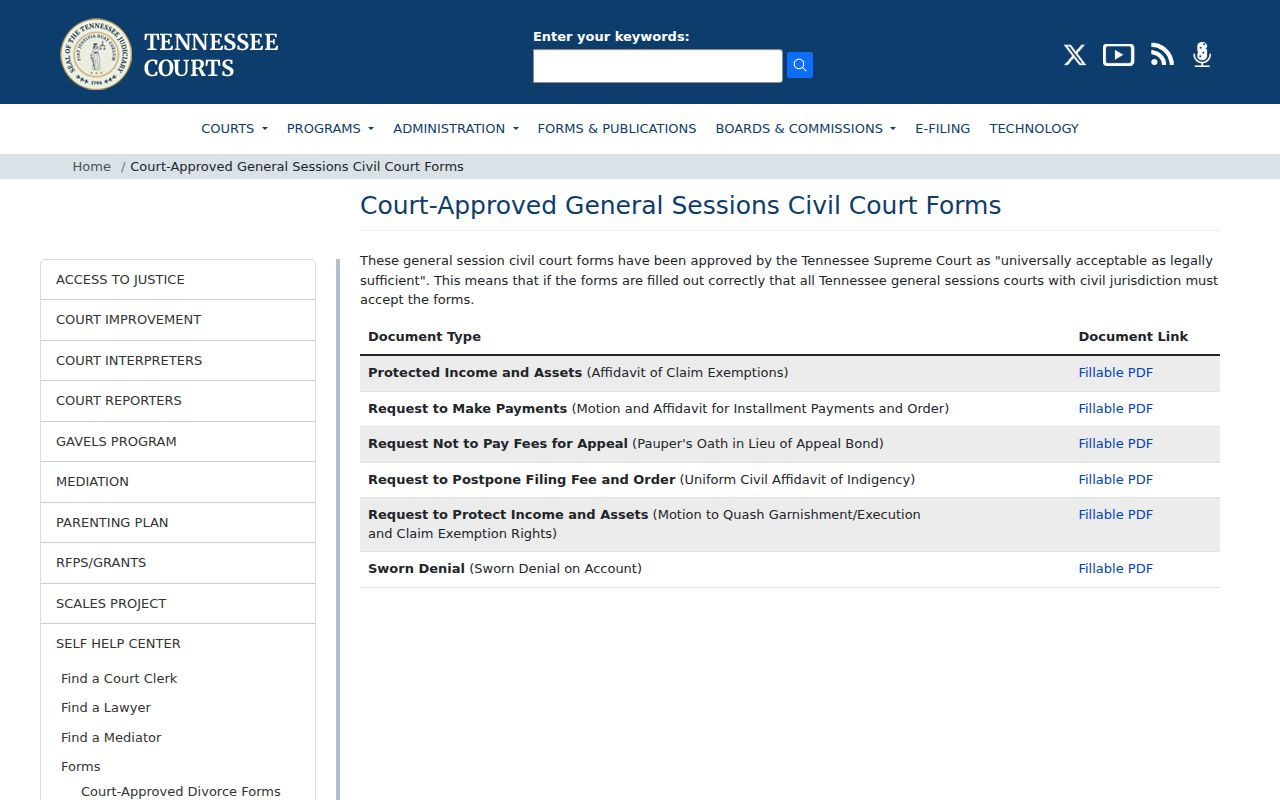
The image reinforces that a short docket notation points to a separate form and process. Blank forms are public, but completed affidavits can contain Social Security, income, employer, dependents, expenses, and property information that should not be republished.
Settings and Hearings on Civil Dockets
A Carter civil PDF may identify a trial, motion, reset, agreed order, consent judgment, or another event. The date is calendar information, not necessarily a final outcome. The First District schedule says jury cases are set at docket soundings every four months and nonjury matters are preset by clerks, but that planning framework does not replace a current case-specific setting.
Continuances and later orders can supersede a PDF. Confirm the date, court, and nature of the event with counsel or the clerk before travel. The Carter County court calendar explains why regular, civil, and detainer dates must be distinguished.
General Sessions Versus Chancery
Johnny Blankenship's Circuit Court Clerk office publishes the General Sessions civil PDFs. Chancery matters route to Clerk and Master Andrew J. LaPorte. No official Carter public Chancery keyword search or docket index was located. The General Sessions archive therefore does not prove that a Chancery matter is absent.
The official Carter County Clerk page illustrates another office distinction.
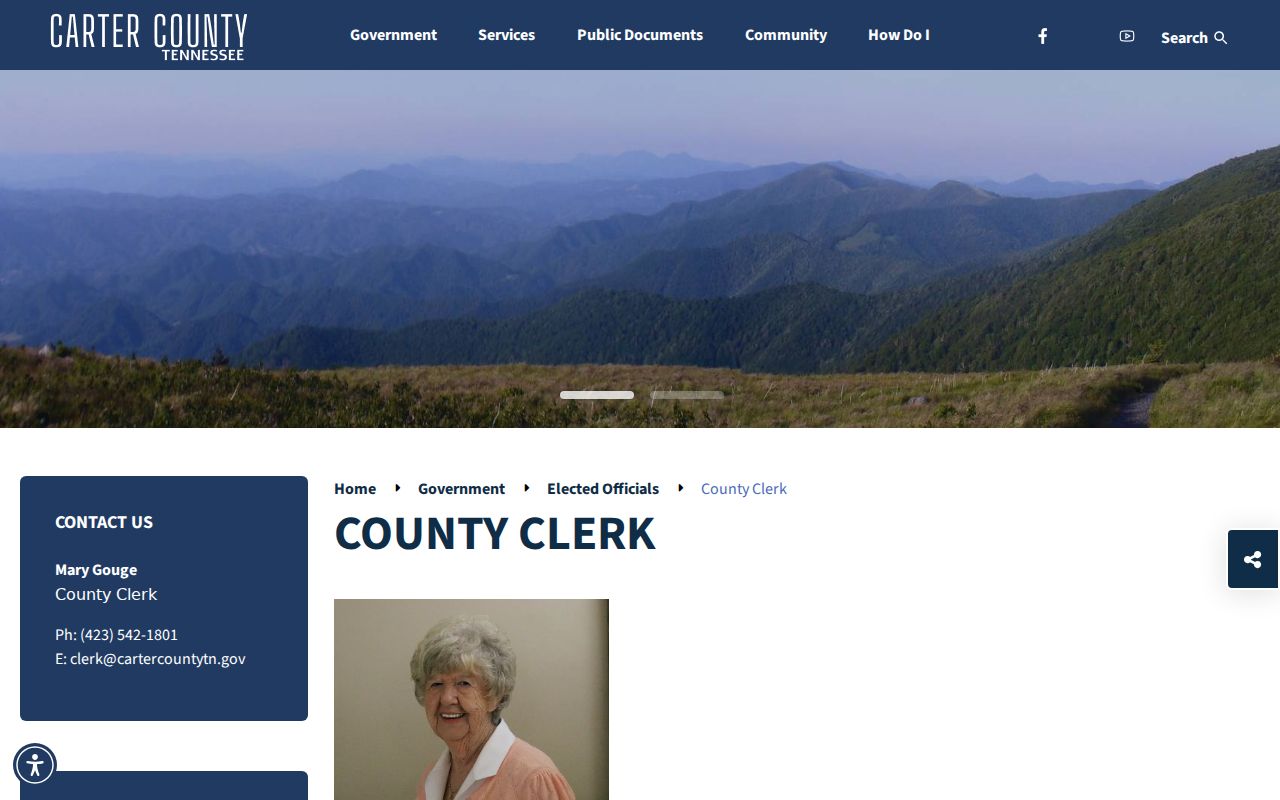
The County Clerk is a separate elected administrative office and should not receive a court-file request merely because its title includes clerk. Identify the court and custodian first.
The physical distinction also matters. The state courthouse directory groups Circuit, Criminal, and Chancery at 801 East Elk Avenue in Elizabethton, while the Circuit Court Clerk site lists an annex office at 900 East Elk Avenue, Suite 906. A person requesting a General Sessions judgment and a person asking about a Chancery filing may need different counters. Call first, describe the court and record, and confirm the correct location and current hours before traveling.
For a useful copy request, provide the court, CV or other case number, docket date, and the precise item wanted. Distinguish ordinary from certified copies and ask whether electronic delivery is available. Tennessee public-record guidance generally treats inspection as free, but copy, certification, redaction-labor, mailing, and court-service charges can apply. A statewide fee reference is not a complete local quote, and no current Carter court-specific fee sheet was located.
Public Access to Civil Dockets
Tennessee Supreme Court Rule 34 recognizes access to public court records while protecting sealed material, statutory exceptions, deliberative records, internal case-management material, and protected data. Domestic, protection-order, financial, medical, adoption, and juvenile-related material may require special handling. A visible caption does not make every document or data element public.
Tennessee access guidance:
Supreme Court Rule 34 defines court records and public-access limits.
The TPRA FAQ explains prompt access and the general seven-business-day response framework.
Inspection is generally free, but copies, certification, redaction labor, and court services can carry charges. No complete current Carter fee sheet was located, so request a quote.
Orders, Exhibits, and the Complete File
A Carter civil docket is best used as a locator. The complete public file can include the initiating warrant or complaint, service return, answer, motions, exhibits, hearing orders, judgment, post-judgment requests, execution or garnishment records, and a satisfaction. Not every item appears in the calendar PDF, and some materials may be sealed, redacted, or otherwise protected. Name the specific record when contacting the clerk.
If a case proceeds to appeal, the appellate record is separately assembled. Tennessee appellate Rule 24 describes certified trial-court papers, original exhibits, and transcript or statement materials. That record is not synonymous with the online docket line. A request for an operative order, an ordinary copy, a certified copy, or a record on appeal should say exactly which product is needed so the clerk can route and price it correctly.